Newsletter #03 Feb. 2026
Hello Friends!
Happy February! We hope you all are bundled up and staying warm as the winter stretches on.
We are so excited to lean into Valentine’s Day with this month’s newsletter and share some resources we LOVE (and there is so much to love).
While Valentine’s Day is a bit of a Hallmark holiday, we love it as an opportunity to reflect on those you love and the ways that you can be present and prioritize relationships in a busy world.
We would love to know how you’re planning to show up for the loved ones in your life, dear reader, both for Valentines Day and beyond! Are you planning any special one-on-one time with the little ones in your life? Connective time out with a partner? What helps you feel truly cared for? As always, we are all ears and always want to know anything you’d like to share with us. Write in and tell us where you’re having success and where you need support!
And our perennial question - are you a part of a coalition yet? From book clubs to collective action around waiting until high school (or later!) to give the kids in your life a smartphone - it all starts with finding your people. If you haven’t found a group yet maybe it’s time to check out our How to Build a Coalition Guide or time to double check our Coalition Finder on our website (new groups are getting added all the time). Check it out and see if there are like minded community members rallying in your area (and if there aren’t yet, put your town or city on the map!) - form a coalition, tell us about it, and we’ll add you to the site and support you however we can along the way.
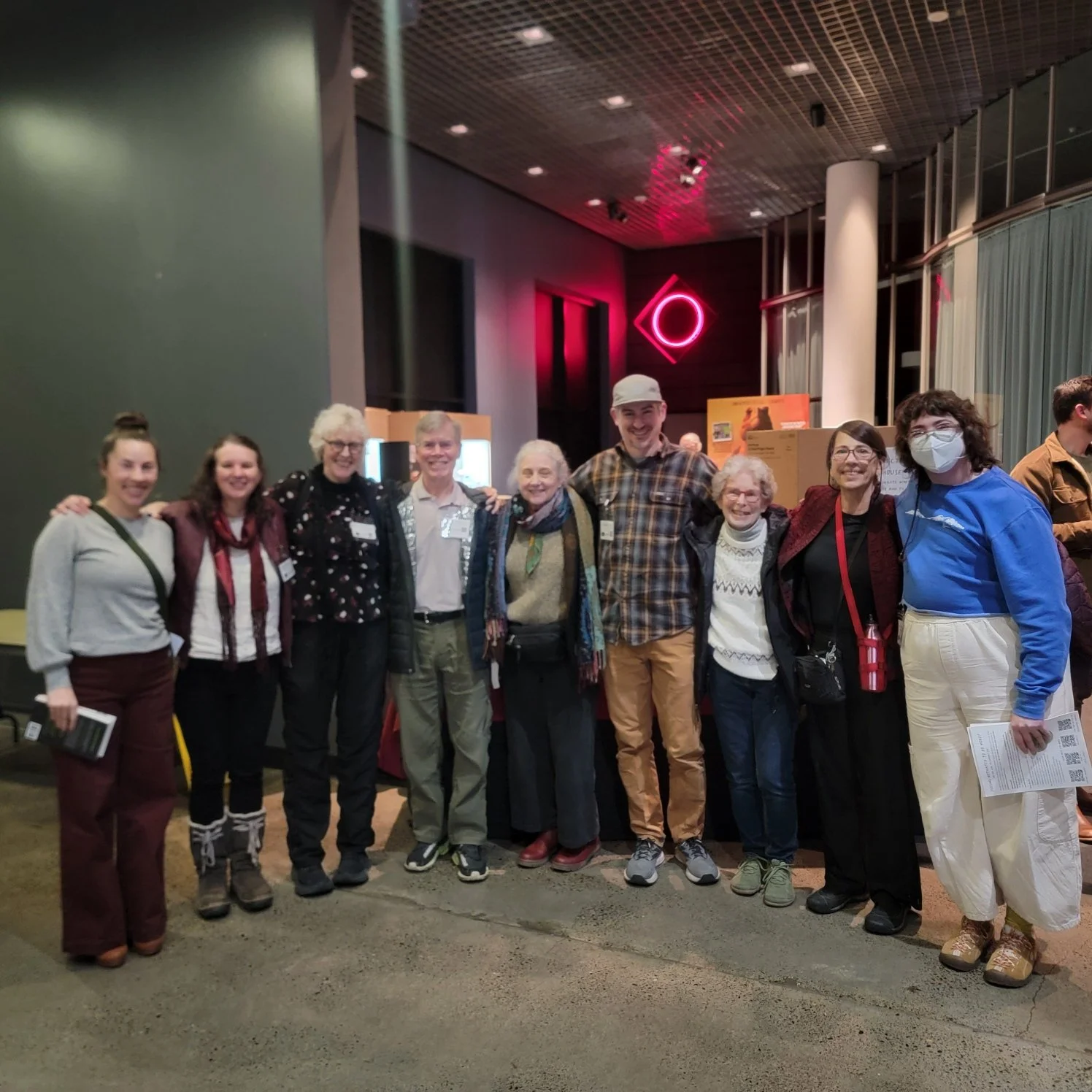
Last month we hosted our biggest event yet - a screening and panel discussion of Can’t Look Away at OMSI! It was a pleasure to meet nearly 300 of you in person and connect over the big things and the little things.
We learned so much putting this screening together and would love to support you (yes, you!) in setting up a screening of your own. Send us an email and we can help you set one up at your school district, church, or community center! The sky’s the limit!
From that event, we’ve planted seeds for a few more...
We have two more screenings on the calendar for Saturday, February 28th and Sunday, March 15th!
Join us at 2:30 pm on Saturday, February 28th 2026 at SE Uplift (in the Fireside Room!) for an encore screening (and panel discussion) of Can’t Look Away! It is free to attend and you can reserve your seat here.
If SW is more your speed, join us at 2:30 pm on Sunday, March 15th 2026 at the West Hills Unitarian Universalist Fellowship for an encore screening, panel discussion, and small group breakouts of Can’t Look Away! It is free to attend and you can reserve your seat here.
Can’t Look Away is a gripping and deeply human story centered on the harms of social media and the intersections of resilience, courage, and the often hidden realities of what our screens can do. This special community screening offers an opportunity to experience the film together in a supportive environment - and to connect with others who care about healing, awareness and meaningful change.
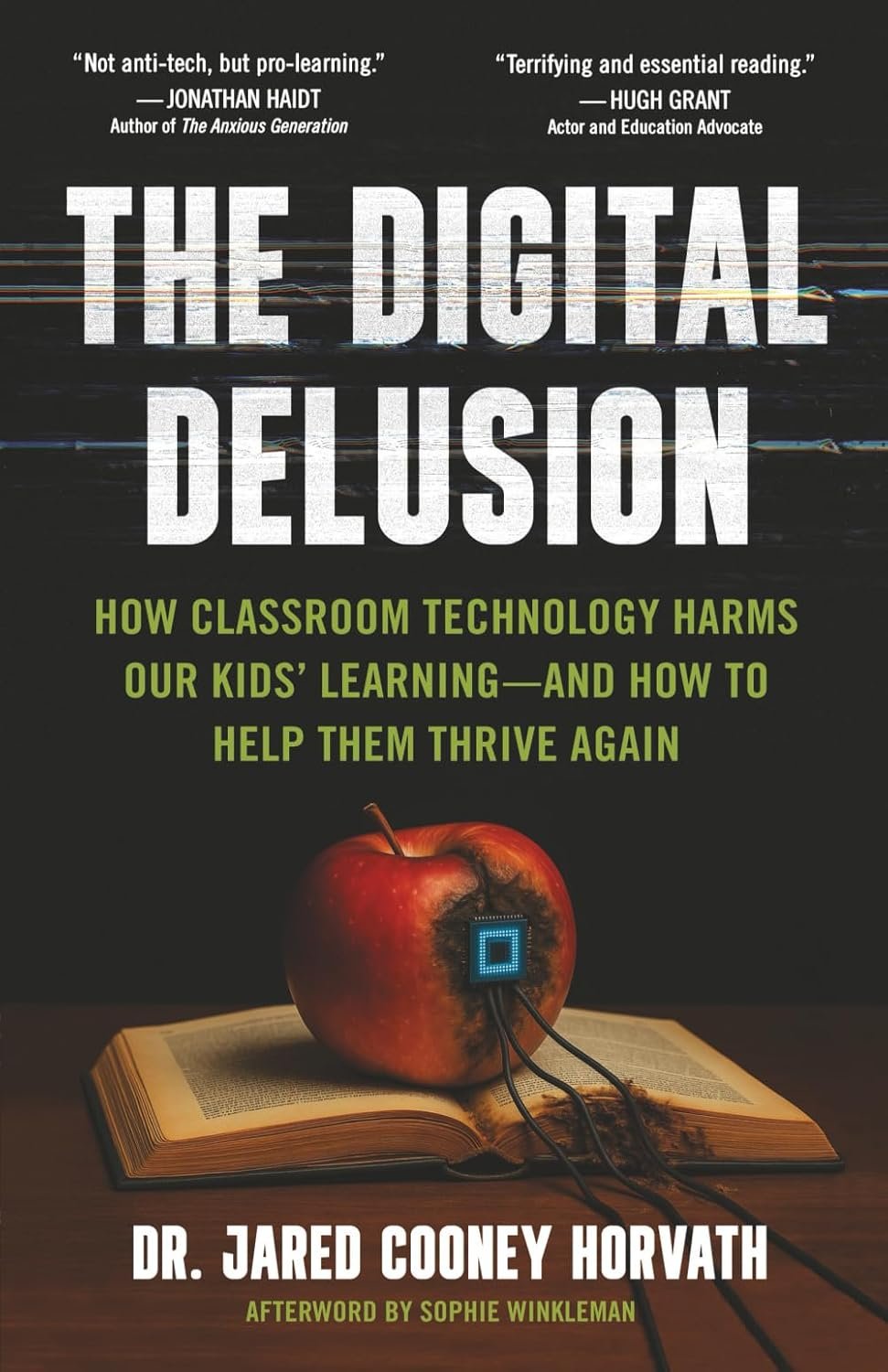
Love to read? It isn’t too late to join our book club!
Chow down at the Ed Tech buffet with Jared Cooney Horvath’s new book The Digital Delusion. In it, Horvath unpacks the myth of classroom technology as progress and lays out the roadmap to reclaim real learning. Meetings will be held every Friday at 10am PST (1pm EST) - register here!
Meetings will be led by our very own Kathy, Jody, and Megan in addition to our friends from VT Coalition, Laura Derrendinger, and DMV Unplugged’s Keena McAvoy.
Big Deal Nationally: The US Senate Committee on Commerce, Science, and Transportation convened a full committee hearing titled “Plugged Out: Examining the Impact of Technology on America’s Youth” on Thursday, January 15th, featuring 3 members of the Smartphone-Free Childhood US advisory board, Emily Cherkin, Jared Cooney Horvath, and Jean Twenge. The links below are excellent resources to send to your school leaders!
Links to Testimony:
Summary Video (Thanks to Deb Schmill!)
In addition, the first of twelve bellwether cases around tech have started in LA. You can read more about them here.
Big Deal Locally: Happening now in our legislative short session - Senator Lisa Reynolds and her colleagues have submitted an AI bill to protect people in every life-stage from AI chatbots (their impact is broader than just kids). Her aim is to put guardrails on the interaction when content becomes dangerous, and especially life-threatening. There is a public hearing on SB1546 which will place guardrails on AI chatbots when they are engaged with people who are experiencing suicidal thoughts. The operator of the chatbot must have a protocol to suggest these people in crisis reach out to trusted family members, a crisis hotline, or a mental health professional. The bill also has the chatbot remind the user that they are interacting with artificial content, and not a human.
Written testimony can be submitted at the bill website linked here. The first public hearing will be Thursday, February 5th at 8am, and you can submit testimony up until Saturday, February 8th at 8am.
We want to put holds on AI ASAP. Passing this bill in the short session frenzy will help pave the way for more in 2027. It sets the precedent for more legislation around AI, social media, EdTech, and phone-free school bills.
Please submit written testimony (and encourage your friends too)! You can write about an AI chatbot experience you had or have heard about. In addition, you can write about struggles you see with phones, social media, EdTech, and how with the preventative measures we’re seeking to put in place against things like AI, some of our current struggle with other tech could have been prevented. AI is largely untested and we do not consent to us or our kids being their guinea pigs. Please send us your testimony too and if you plan to try to testify virtually or live in Salem, lets coordinate to avoid redundancy!
Once the bill gets out of this committee, it will go to the House where there will be another chance to testify. Last, it will go up for a vote and we will ask ALL of you to write a letter to your legislators. MEANWHILE - We encourage you to sign our Letter of Legislative Support to speak up for the changes you want made!

Kathy’s Pick:
the Top 5 Resources for Fighting EdTech by Emily Cherkin
Kathy says-
We are hearing about frustrations from so many parents about screens the schools gave their kids. Common complaints are: kids pretending to do their homework, while playing games (AI platforms will teach kids how to fool parents), math and reading programs that have so many bells and whistles it may as well BE a game, a 4th grader who accessed the Internet 300 times in one day, kids seeing porn for the first time! How can a kid learn anything with these constant distractions? My fav→ Emily Cherkin, has been fighting Ed Tech for over a decade. Check out her article and sign up for her substack, First Fish Chronicles. In the last few months she has spoken to Parliament in England and the US Senate in mid January.
Jody’s Pick(s):
Screen Media Use and Children’s Developmental Outcomes with Dr. Megan Gath (video)
Jody says-
I’d like to recommend an article that is a prospective trial following 6000 children from 9 months to 12 years of age, looking at the long term outcomes of screentime use. These studies are needed to bolster the causal relationship of screentime exposure to long term harm.
GAINING dedicated its global January quarterly meeting to reviews of this study, and one from England that show that kids exposed to more than 1.5 hours/day of screentime suffer long term emotional, behavioral and educational harms. The highlights of their meeting notes are included below:
At age 2, a typical child is engaged in or adjacent to digital media for 3.5 hours in a day, including TV playing nearby. By age 8, average media time grows to 5 hours per typical day.
Even at 9 months, many babies are being exposed to 3 hours of screen time in a day.
Looking more closely, 41% of the 2-year-olds studied were already heavy users, watching 5 hours a day. Only 14% had little or no screen time. (Let’s flip those percentages!)
By age 12, those who had heavy screen use as toddlers still used screens heavily and had more problematic use, more internalizing and externalizing emotional issues, and poorer educational skills than those who had little media use as toddlers.
Surprisingly, by age 12, low screen users had the greatest “digital competency.” That is, they were better at obtaining correct information in internet searches, operated more safely online, and had better judgment about sharing personal details online, as judged by their teachers.
Megan’s Pick:
Teen Video Game Addiction: Five Things to Know by Erin Digitale
Megan says-
Working with families for decades, both as a teacher and now as a screen time educator, I have found that the screen time activity parents have the most questions about is gaming. How do I know if my child is gaming too much? Is social gaming the same as socializing in-person? I used to play video games as a kid, and it didn't take over my life. Why is it so much harder for my child to keep it in balance? Is gaming addiction a real thing?
I love this article about Bradley Zicherman from The Youth Recovery Clinic at Stanford Medicine Children's Health. Zicherman explains everything a parent needs to know about gaming in a clear and approachable way. This is information every parent in the digital age should have!
Simcha’s Pick:
The Bottomless Bowl Worksheet by Megan Orton (Hi Megan!)
Simcha says-
A few weeks ago I was helping our own Megan Orton with reformatting some of her worksheets and handouts. This one in particular really struck me in how I consume media on screens and also how so many of my peers do too. Megan uses this wonderful analogy of eating a bowl of soup and how reaching the bottom of the bowl is a natural end to the activity of eating the soup - of course you can always be full before reaching the bottom and opt to store away some soup for later but I’d reckon that most folks are eating the amount of soup they put in their bowls. Now what if instead of reaching the bottom of the bowl - it was being endlessly refilled with more soup? That is what scrolling on our devices is like. I think about this analogy all the time and think it’s a really valuable one to consider as we all try to use our devices less and live in a less online world.
We are also debuting a new segment in our newsletter…
What are you getting up to in your coalitions? What projects are on the docket? What changes are you making? Submit them here and we can feature you in our March newsletter!
OR Unplugged is a non-profit organization run almost entirely by volunteers. Your donations help support the cost of creating & distributing resources, putting on events, doing outreach, facilitating workshops, and much much more. Your donations help us show up for our community and build a better future for our kids. Any support is welcome and appreciated. You can donate here.
Comments, queries, or concerns? You can reach us 24/7 (practically) at ORUnplugged@proton.me
Warmly and with gratitude,
the OR Unplugged team
Kathy, Jody, Megan, & Simcha