Newsletter #11 October 2026
Hello Friends!

We’re sending this newsletter to you from deep inside a corn maze - and boy do we hope we can find our way out! That feeling of being in a corn maze with no end in sight can be familiar as we work to build the world we want for Oregon’s kids. Sometimes it can feel overwhelming in its vastness.
Something I like to think about when it all feels like too much is that we will likely always have our boulder to push uphill (in a Sisyphean manner) but that sometimes, there will be people there to help us push the boulder, or who may be pushing similar boulders, and that the size and shape of the boulder may change (and its heaviness too) but as long as we’re all pushing alongside each other, we’ll get where we need to go and we’ll get there together.
What helps your boulder feel lighter? Or in what ways can we lighten your boulder or give it a nudge? Our email inbox is open 24/7 and we want to know what we can be doing to support you and your community.
Boulders aside, we have a pretty exciting fall events calendar that you ought to check out!

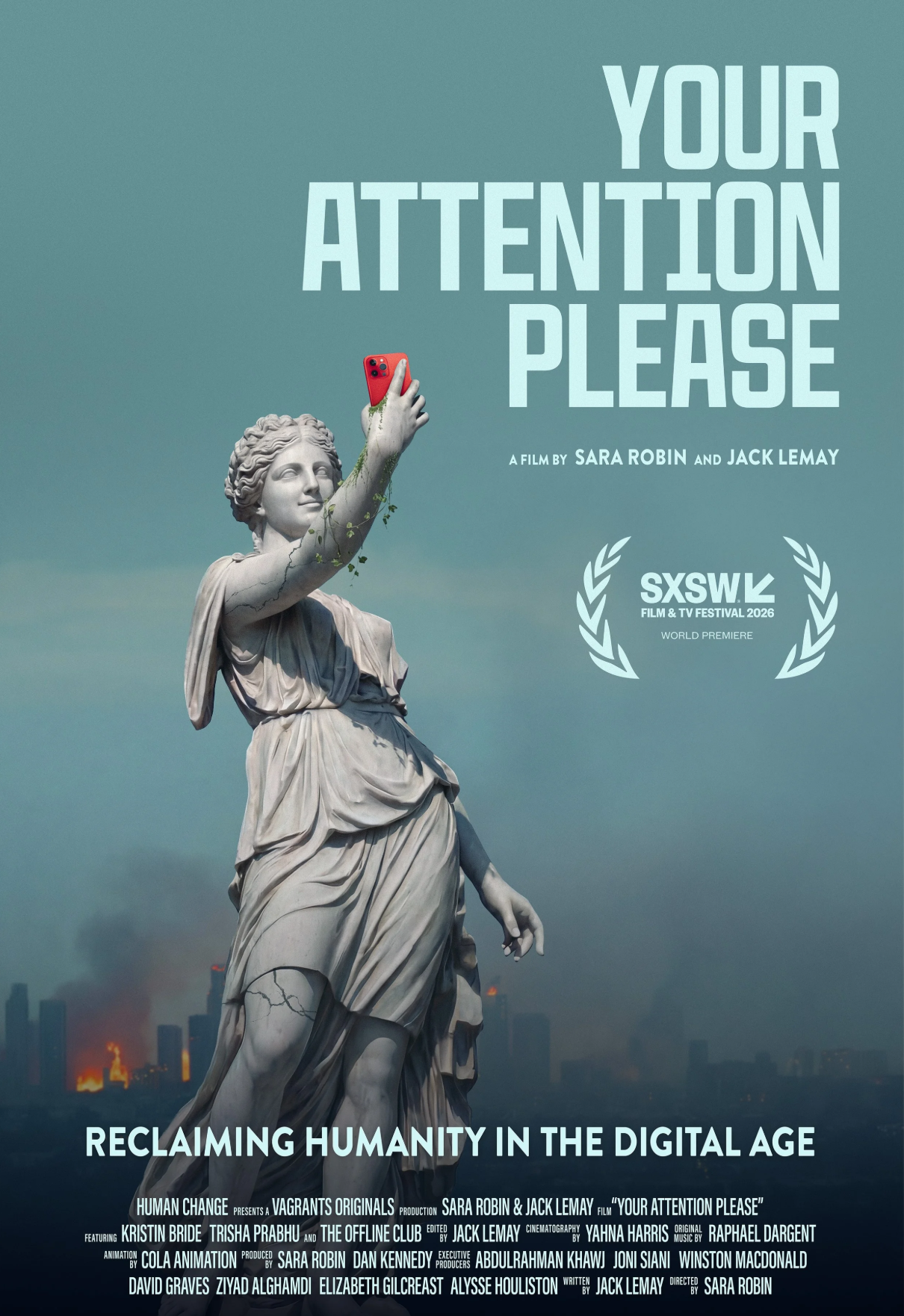
One of our favorite films is now available to stream at home!
Your Attention Please is a groundbreaking documentary on the power and value of our attention and the impact of social media. If you haven’t been able to make it to one of our screenings, you’re in luck! You can now watch it from the comfort of your own home.
Find out more here.
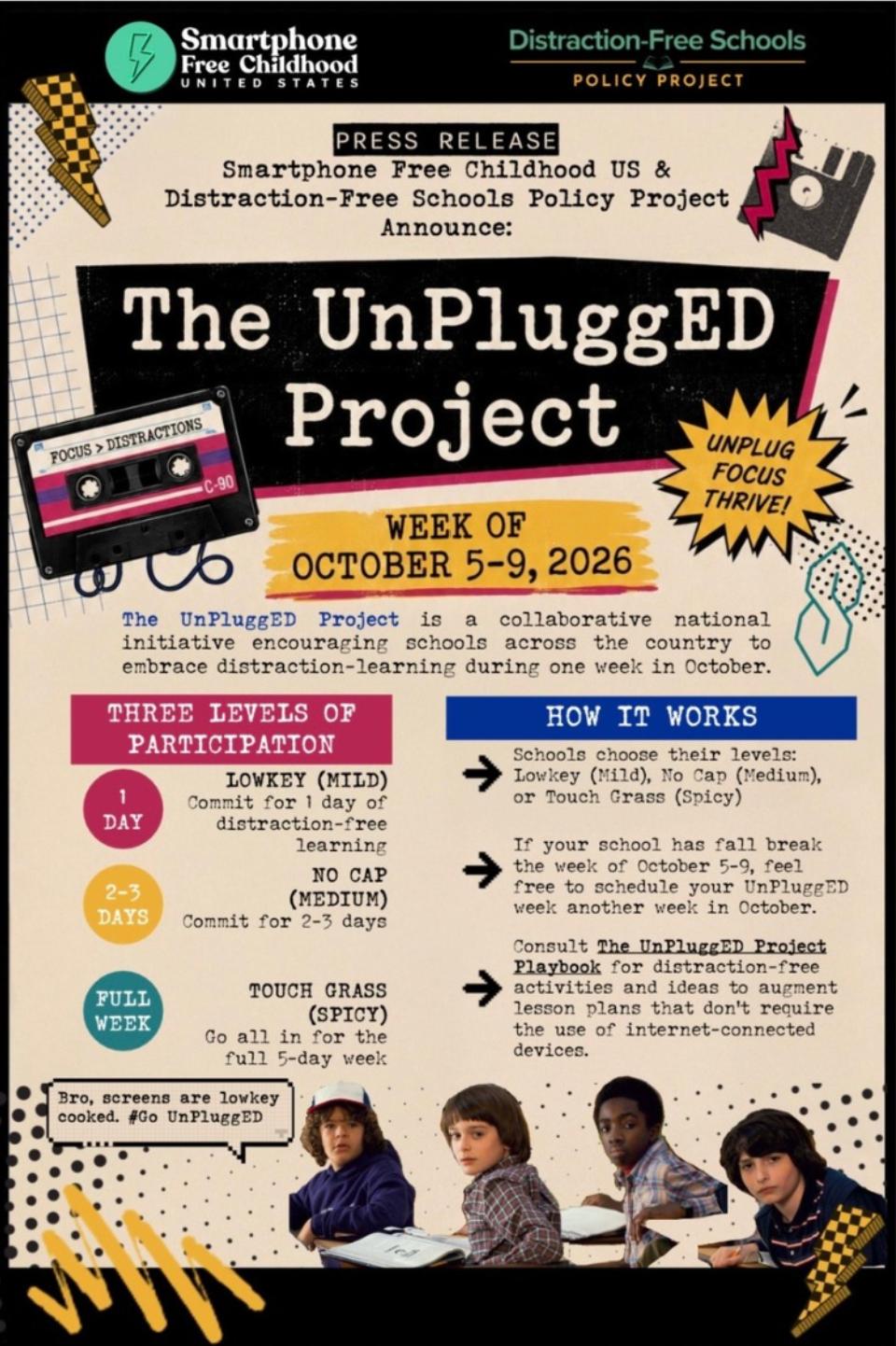
The UnPluggEd Project is a collaborative national initiative from Smartphone Free Childhood US and Distraction Free Schools Policy Project that encourages schools and families across the country to embrace and lean into human connections and away from the distractions of technology.
We invite families, administrators, educators, legislators to join for 1 to 5 days of leaning into human connections free of technology distractions!
Get UnPluggEd: October 5th-9th, 2026
To get more information and to register, click HERE
Learn more at the DFSPP Community of Practice (COP) Call. The COP calls are an invaluable way to stay in the loop nationally on how these conversations around screens in schools are playing out from coast-to-coast.

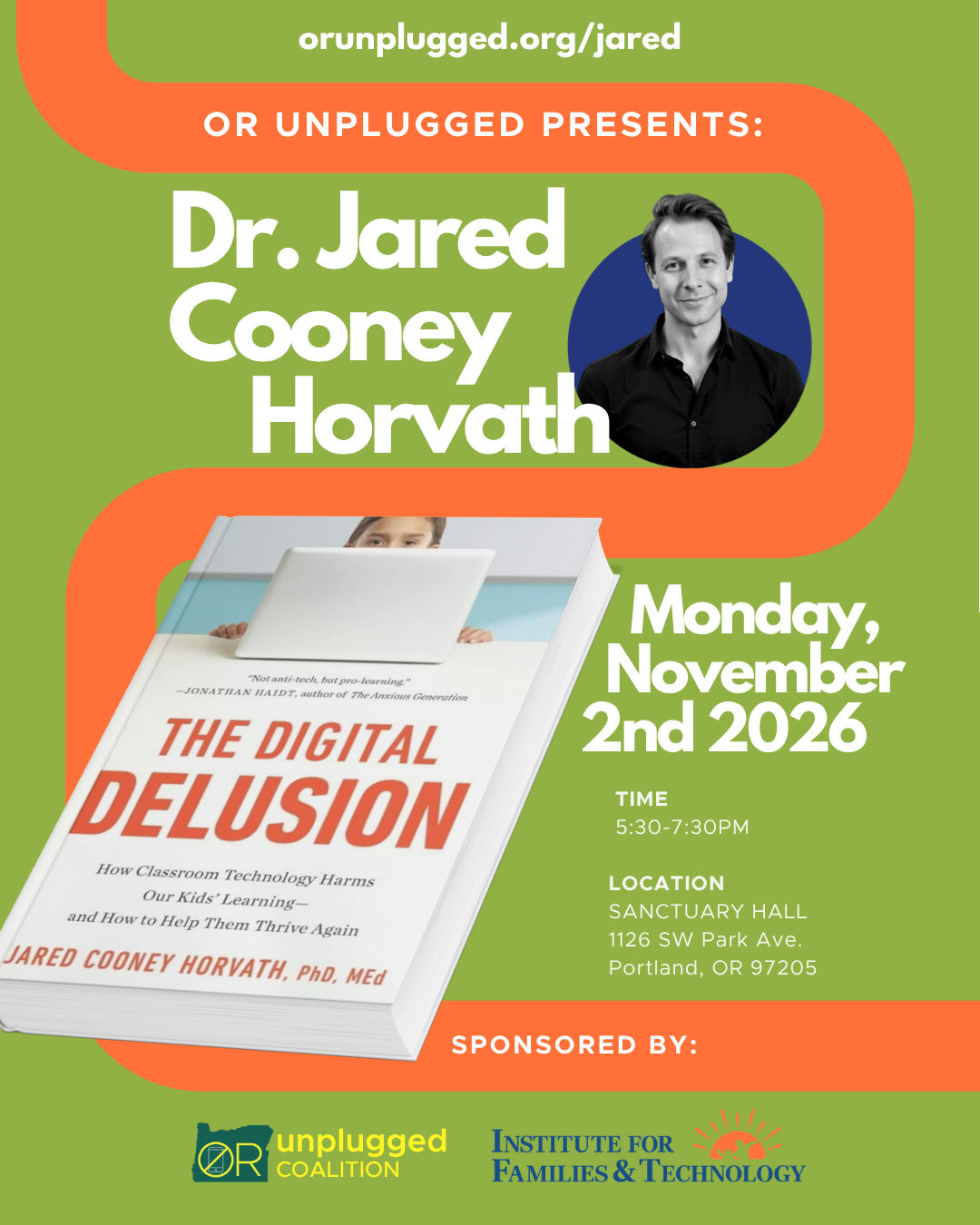
Curious about the impact of tech in the classroom?
Join us on Monday, November 2nd at 5:30 as we host a free talk with neuroscientist, educator, best-selling author, and expert in the field of human learning - Dr. Jared Cooney Horvath
Snag a spot here, and if you’d like to be a volunteer at this event, email us at hello@orunplugged.org

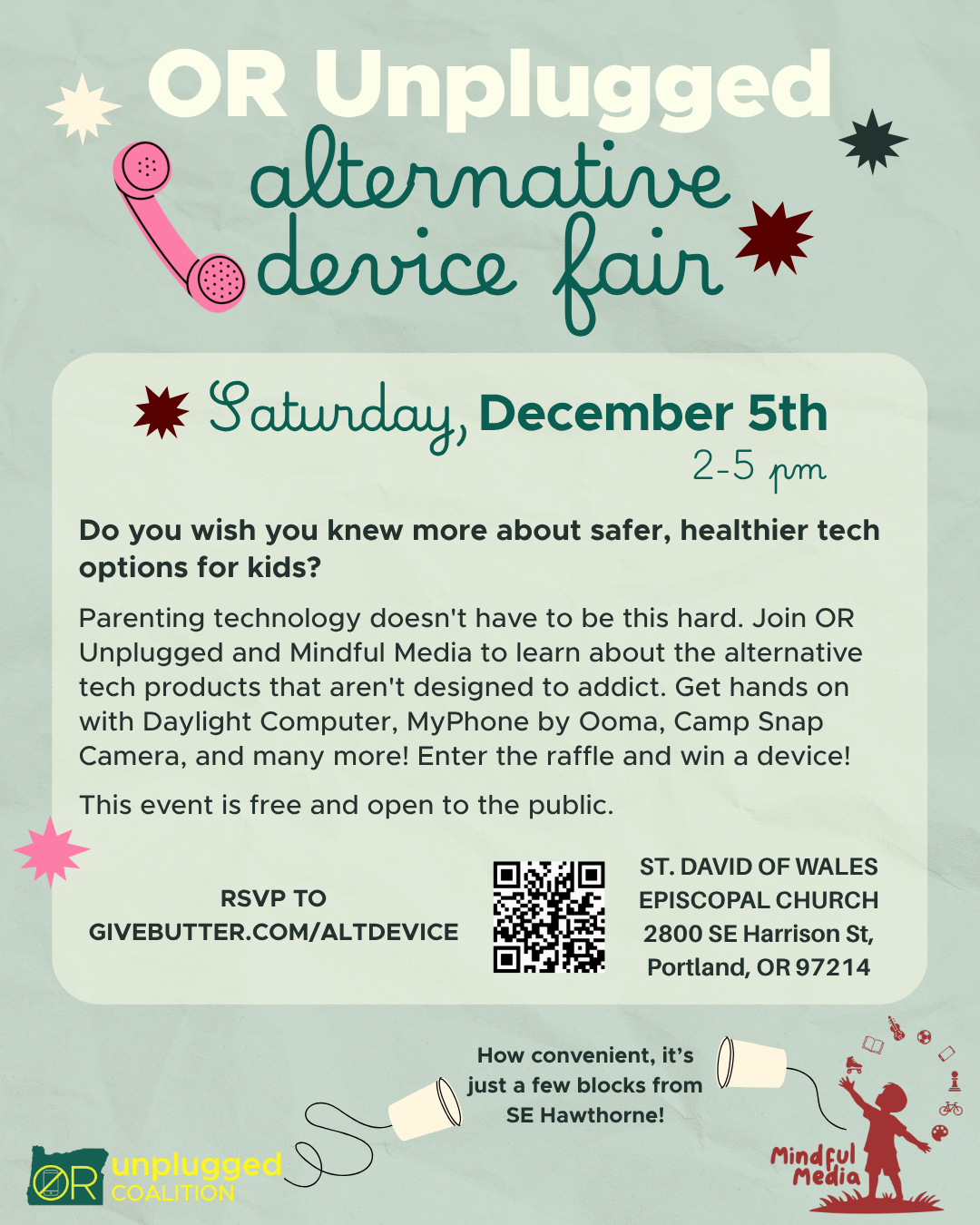
Just in time for holiday gift giving, come check out all the alternative devices you're curious about!
From minimal phones to thoughtfully designed tablets - we'll have all your family needs to connect without the noise that traditional tech can bring.
We’ll also have a raffle running that you won’t want to miss.
RSVP here, and if you’d like to be a volunteer at this event, email us at hello@orunplugged.org
September was a huge month in the legislative world.
Legislative days happened in Salem and we had a blast carpooling and connecting with all of you who joined us! The feeling of meeting so many of you in-person was electric and has had a wonderful snowball effect - heaps of meetings with legislators all through September.
We’ve been hammering home what matters to us, suggesting ideas for legislative concepts (the first step of drafting a bill before they get reviewed for legality, fiscal implications, implementation, and unintended consequences), showing what worked in other states, and now… we have our fingers crossed until legislative days in December.
Some legislative concepts we’re excited about that were submitted:
From Senator Lisa Reybolds re: Digital Products in Schools
Reduced screen time
K-2nd grade - No screens
3-8th grade - No 1:1 devices, tech to be kept on carts with a max of 30 mins/day
9-12th grade - Max 1 hour/day generally and a max of 1.5 hours/week in each subject
White list all tech products used in schools and ensure they meet the criteria of being safe, legal, private, and effective
AI procurement bill for schools
From Representative Emily McIntire re: Digital Testing
If a child does well on the first two interim tests, there will be no 3rd test
From Representative Emerson Levy re: Social Media
Age minimum for social media
Warning labels for social media
Parameters designed to protect youth implemented in to social media platforms
We expect to get more information on these early bills at the end of October. Through the rest of fall, these bills will be fine-tuned and part of that process includes feedback from the public (AKA you)! If you want to make your voice heard via virtual and in-person meetings you can join us on Legislative Days in Salem from December 1st through the 3rd. For more details on the legislative proces, check out Oregon Legislation 101 for this 2026-27 session.
September’s legislative days (and the weeks following) wouldn’t have been as impactful without a LOT of hard work from Ross Schwartzendruber (Salem Big Tech Harms) and the folks in Beaverton Schools Beyond Screens - big thank you for all of the time and energy to help make Oregon a better place for kids to grow up.
Curious about what we are advocating for in the legislative world? Check out our goals here.
There is always something to work on, whether its state-wide or local and in that spirit we’d love to encourage you, if you are in the Beaverton School District, to show up (and show up with your families and kiddos) on Wednesday, October 13th at 6:30pm for rally outside of the Beaverton District Administration Office (1260 NW Waterhouse Beaverton 97006). There is a board meeting that begins at 7pm and we would like to encourage as many people as possible to come. This will be the biggest event of 2026 for the Beaverton Schools Beyond Screens group and having as many voices represented as possible is crucial!
Beaverton -
BSD will be moving to a Chromebook cart model for middle schools
The BSD K-5 committee selections have been made. This committee will "guide the way the district approaches this topic for K-5"
For high school, the district is not taking any action and is not prepared to discuss any changes
We are waiting for the district to share an AI policy
We have meetings on the docket with the mayor and the teachers union in October - stay tuned to hear how they go!
We are always looking for people to speak at board meetings, attend board meetings, serve as school liaisons, and help distribute Schools Beyond Screens flyers and materials
We officially have our own website! Check us out here.
Our biggest ask is to join us at our rally on October 13th at 6:30 pm outside the district offices (1260 NW Waterhouse Beaverton 97006). This is a family friendly rally and we need as many people as possible to come and have their voices heard.
Want to get in touch with Beaverton Schools Beyond Screens? You can email them here.
New Coalitions -
We are so excited to welcome the folks in Salem-Keizer and the folks from Ashland to the OR Unplugged umbrella! They are both doing amazing work!
If you’re in the Salem-Keizer area, you can find more information about Salem-Keizer Screens Beyond Schools here.
And if you’re in Ashland, you can get in touch with the Joyful Generation group here.
What are you getting up to in your coalitions? What projects are on the docket? What changes are you making? Tell us here and we can feature you in our November newsletter.

Kathy’s Pick: The UnPluggEd Project Webinar for Educators and Administrators
Kathy Says - Many parents have learned that ed tech is failing our kids and are asking for digital products and devices to be reduced in our schools (and removed for grades K-2). We want safe, legal, private, and effective digital products. We are talking to each other, teachers, principals, superintendents, school boards, and legislators. The next question is HOW will we do it? The UnPluggEd Project webinar is a great peak into the HOW from a Kansas principal and a North Carolina superintendent. This webinar is also especially timely as we take part in the UnPluggEd Project from Oct. 5-9th.
I love pairing this webinar with Skills Before Screens: One Year Later, which is another phenomenal webinar that shares data, lessons learned, successes, challenges, and next steps from North Carolina to fulfill their 2025 Balanced Instruction Through Reduced Screen Use Resolution via two tech-free days across K-12.
Jody’s Pick: The Risks of a Chatbot Childhood (which has since been renamed to “A Chatbot-Free Childhood Will be a Status Symbol”) by Dana Suskind MD
Jody Says - Dr. Suskind is a pediatrician, surgeon and author who is invested in applying modern neuroscientific knowledge in the service of optimal brain development in children. She explains how AI companions and toys can harm children by providing conversation and false intimacy without the friction, the give-and-take, and the rupture-and-repair that real human relationships provide and which are essential for optimal social, emotional and cognitive development. She describes:
Remove the friction from childhood, and the social-emotional system never gets what it needs to properly develop. The neural architecture that was supposed to be built through imperfect, sometimes-frustrating human interaction may never fully form. Neither may frustration tolerance, empathy, or resilience. Cognitive skills may suffer too.
This should be welcome news for all of us: our imperfections are a required building block for our children’s well-being and our imperfect presence is way more valuable (and less dangerous) to our kids than any digital tool.
Megan’s Pick: Canada Is Not Banning Teenagers from Social Media — It’s Trying Something New by John Matheson
Megan Says - I love this article about what Canada and the EU are doing to protect kids and teens from online harms! It goes into detail about the addictive elements in technology (called Persuasive Design) that I highlight in all my parent talks. Kudos to Australia for being the first country to take action, but the truth is that social media bans like the one in Australia don't get to the root of the problem. Canada is creating a new governmental department called the Digital Safety Commission, and tech companies will have to prove to this commission that their products are safe for kids and teens. In order for the commission to allow a product (including AI) to be used by minors, all addictive elements must be removed, contact with unknown adults must be removed and robust, easy to use parental controls must be in place.
The EU has done something similar for kids under 15 that includes video games as well as social media apps. It's wonderful to see countries taking action to regulate Big Tech in a way that actually addresses the product design problem, and puts the burden of safety on the tech companies where it belongs. It's time for the tech companies to stop creating an impossible situation for parents to manage and then blaming us for not being able manage it!
Simcha’s Pick: Kids and Screens: How Screen Time Affects Learning and Motivation by Megan Orton
Simcha Says - I’m a little biased this month because I helped Megan with the editing of this video but I could not recommend it more highly for parents and caregivers trying to find a foothold in navigating the screen time dynamics in their households. Megan contextualizes the shift that happened in the tech industry in 2007 and how it set the stage for the power struggles around screens that we see now playing out over the dinner table. It’s a great watch for folks who are parenting or caring for kids but it’s also an interesting peak into our brain chemistry and the science of what makes a screen hard to put down for the rest of us.
Amy’s Pick: Teachers Want Screen Time Limits in School, Too by Sarah Mervosh
Amy Says - 6 in 10 teachers say they would like less screen time in classrooms. The problem is they are unsure of how to achieve that.
This calls to attention that we should not only advocate for reduced screentime in classrooms, but also help school districts with actionable alternatives to replace screens. It's no doubt that it's so important to work with legislators and school boards to pass and enforce these policies. The second step should be to provide funding and alternatives to screens that are actionable to help with accountability.

This month’s how-to comes to us from Joanna Houston and Meredith Bouvier from the Classroom Tech Transparency Project who have built a phenomenal tool to understand what your child is getting up to on their school-issued device.
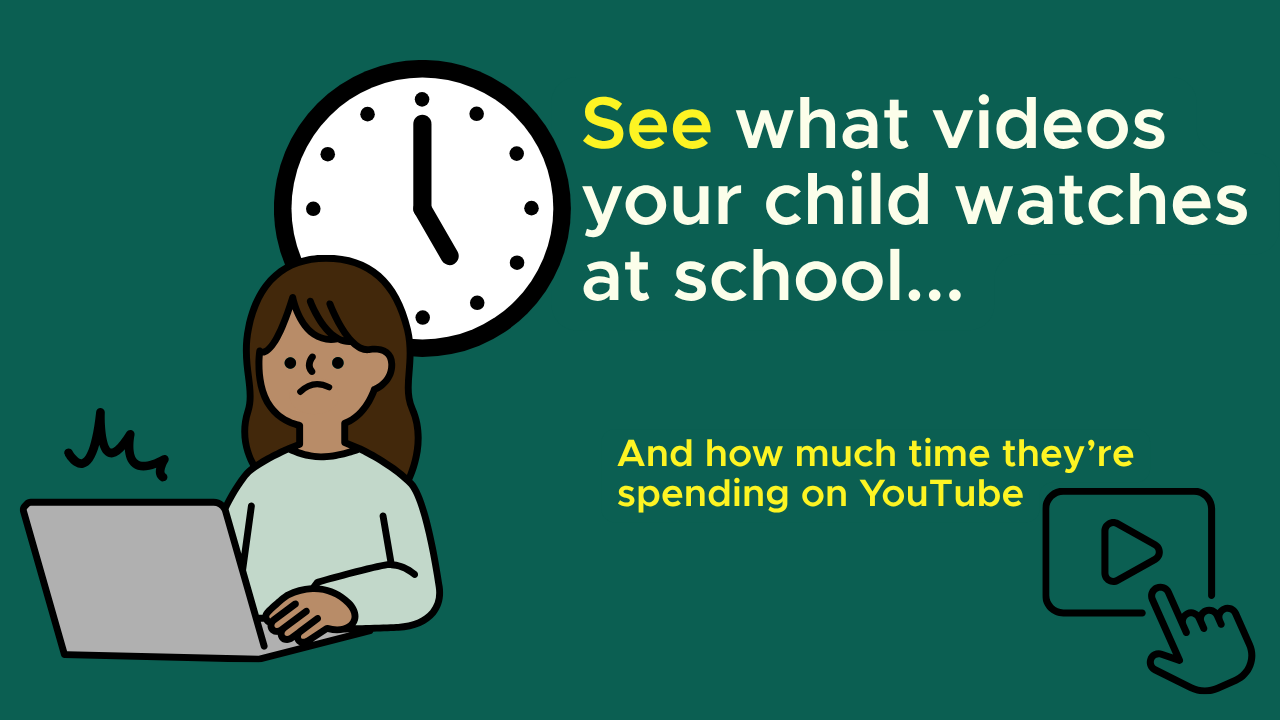
The tool itself is extremely straightforward and can be accessed here.
The only prep work you’ll need to do to use this tool is to first download your child’s watch history from their Google Classroom account.
Lucky for us, there is a video to walk you through the process! How easy is that?
Getting stuck or finding yourself with questions? Sign up here to join us for a webinar walk-through with Joanna Houston on October 23rd from 12-1pm PT.
Want to return to a how-to from a previous month or explore the entire archive? You can find our previous tutorials here.
OR Unplugged is a non-profit organization run almost entirely by volunteers. Your donations and volunteer time support creating & distributing resources, putting on events, doing outreach, facilitating workshops, and much much more. You can help us show up for our community and build a better future for our kids. Any support is welcome and appreciated. You can donate here and learn more about OR Unplugged here.
Comments, queries, or concerns? You can reach us 24/7 (practically) at hello@orunplugged.org
Warmly and with gratitude,
the OR Unplugged team
Kathy, Jody, Megan, Simcha, Amy, & Casper